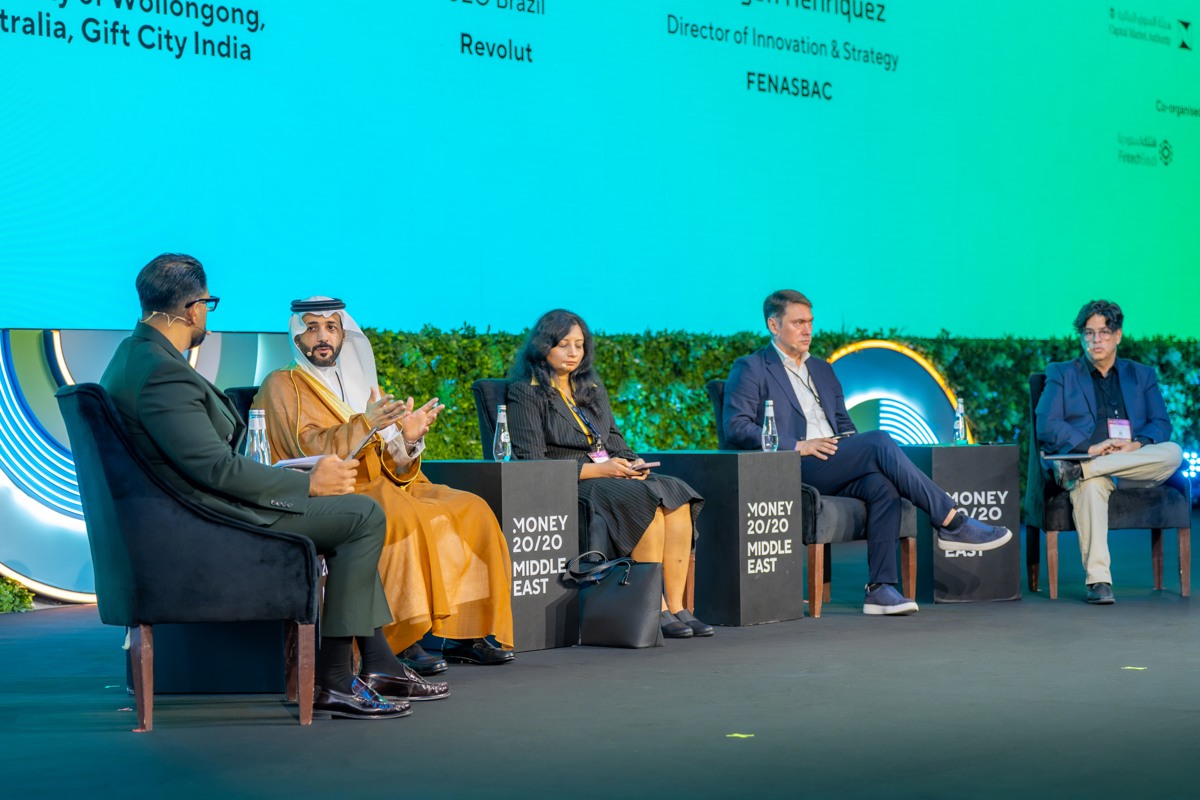
Mr. Mana Al-Khamsan, Chief Executive Officer of The Financial Academy, affirmed that true financial empowerment goes beyond merely providing access to services and products. It is closely tied to the extent to which individuals and professionals possess sufficient knowledge and skills to evaluate their options and avoid risks — ultimately leading to more informed and confident financial decisions.
This came during his participation in a panel discussion titled "From Access to Empowerment: Financial Empowerment as Infrastructure," held as part of the Money20/20 Middle East 2026 conference in Riyadh.
Al-Khamsan explained that measuring the real impact of financial literacy and development initiatives requires moving beyond conventional metrics such as training hours, passing assessments, or completing programs. He emphasized that the fundamental benchmark for success lies in "tangible behavioral change" — whether through improved personal budget and debt management and enhanced savings habits, or through greater professional effectiveness within the financial ecosystem.
He noted that a qualified financial professional bears the responsibility of simplifying complex data and information and translating it into clear, actionable guidance that helps clients identify the most suitable options for their needs and circumstances. He stressed that the ultimate goal is to provide trusted advice rather than focusing solely on driving sales.
Al-Khamsan added that keeping pace with rapid changes in financial markets and products requires a firm commitment to continuous learning, alongside efforts to harmonize professional standards and knowledge levels — ensuring a consistent, high-quality level of service and guidance across all financial institutions.
He concluded by noting that defining the profile of the "professional of the future" calls for an integrated blend that goes beyond traditional technical knowledge to encompass an understanding of digital technologies and artificial intelligence applications, an awareness of evolving client needs, and adherence to the highest ethical standards and effective communication skills. He pointed out that the impact of training programs is most clearly realized when employees are provided with an enabling work environment that empowers them to apply their newly acquired skills — supported by management that allows for experimentation and learning — making financial development a gateway to outstanding performance and sustainable professional conduct.






 Media Room
 News
News